Home Energy Monitoring with Home Assistant – Real Data
Energy monitoring is not about collecting more data, but about understanding how a system actually behaves over time.
This project focuses on monitoring and optimizing energy consumption in a real home environment, using data to make informed and practical decisions. The goal is reliability, efficiency, and long-term sustainability — not over-automation.
At the core of the system is continuous monitoring of energy flows, including consumption, production, and load distribution.
The data is used to observe patterns, identify inefficiencies, and evaluate the real impact of automation logic.
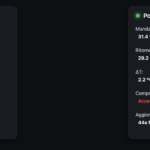
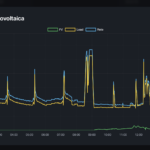
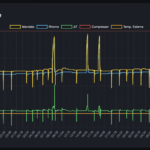
The dashboard is not meant to be visually impressive.
It is a working tool designed to answer simple but critical questions:
-
when energy is consumed
-
how consumption changes over time
-
how the system reacts to different conditions
-
whether an automation actually improves efficiency or not
Automation is applied selectively.
Not everything should be automated, and not every decision should be delegated to software. The focus is on predictable behavior, clear rules, and the ability to intervene manually when needed.
This project emphasizes a data-driven approach:
-
observe first
-
automate later
-
verify results over time
Energy optimization is an ongoing process, not a one-time setup.
Small, incremental improvements based on real data are more effective than complex systems that are hard to maintain.
This section documents practical experience, design decisions, and lessons learned from running a real energy monitoring system in daily use.